
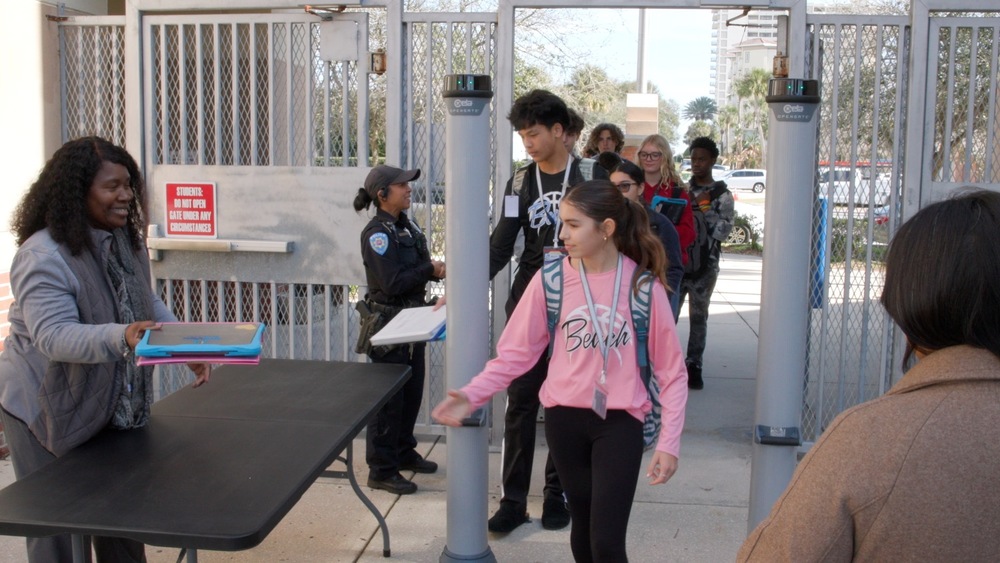
Jan. 22, 2026 — Duval County Public Schools is moving forward with the installation of walk-through weapon detection systems at all district middle schools as part of its ongoing commitment to maintaining safe and supportive learning environments.
The installations will occur in phases over the coming months. The first middle schools are scheduled to receive the systems during the final week of January, with the final group of schools expected to be completed by early April.
Once installed, the systems will screen students as they enter the building each morning. Similar to the detection systems already in place at all district high schools, this technology is designed to quickly identify prohibited items while allowing students to move through the entry process efficiently.
Schools Will Notify Families Directly
Families will receive advance communication directly from their school principal prior to installation. This communication will include the school’s installation date and details about any procedures students and families should anticipate. Installation timelines will vary by school.
Instructional Video for Students and Families
Ahead of installation, each principal will designate a day and time for students to view an instructional video explaining the new weapon detection process. Families are also encouraged to watch the video, which is available below, to learn more about the technology and what to expect.
Frequently Asked Questions
How soon will weapon detection systems be in place at middle schools?
The district will install these systems at all middle schools in phases from late January through early April.
What type of weapon detection systems are being used?
The CEIA OPENGATE systems are designed to efficiently screen large numbers of people, including backpacks, while maintaining a steady flow of entry. The systems are portable and can be used indoors or outdoors.
Are these systems similar to the weapon detection systems used in high schools?
Yes. The systems use similar technology to the Evolv systems currently used in high schools. The main difference is the manufacturer, which is CEIA OPENGATE.
How are these systems different from traditional metal detectors?
Like Evolv, CEIA OPENGATE systems are more advanced than traditional metal detectors. They are designed to more accurately identify potentially harmful metal objects rather than sounding an alarm for all metal items, such as coins or keys.
Who will operate the weapon detection systems?
School police officers, security personnel, and trained school-based staff will manage the entry process. All staff involved will receive specific training on how to operate the equipment.
What will the student entry process look like?
Students will walk through the detection system one at a time. If the system alerts, the student will be directed to step aside for a brief secondary screening so the main line can continue moving.
What happens if an alert occurs?
If an alert occurs, staff will work with the student in a nearby area to determine the source of the alert. Many everyday school items—such as laptops, metal eyeglass cases, umbrellas, or metal lunchboxes—may trigger an alert. This is known as a secondary screening. This process will include identifying whether the item is permissible, determining whether it is on the student or in a backpack, and, if necessary, using a handheld device or conducting a backpack or bag search.
What types of items can the technology detect?
The systems can detect a range of prohibited items, including but not limited to knives, firearms, handguns, long guns, and materials or components used to construct an explosive device.
What happens if a weapon or illegal substance is found?
If a weapon or illegal substance is identified, law enforcement will immediately take possession of the item. The individual involved may face law enforcement action and school disciplinary consequences in accordance with the Student Code of Conduct.
How will safety screening impact morning entry?
The systems are designed to provide fast, efficient screening and maintain a natural flow of entry. However, minor delays may occur during the initial implementation period as students and staff become familiar with the process.
What if a student refuses to go through the weapon detection system?
If a student refuses to comply with the screening process, a parent or guardian will be contacted and the student will be sent home.
Does everyone entering a middle school need to go through the system?
Yes. All students, staff, and visitors entering a middle school will be required to pass through the weapon detection system.