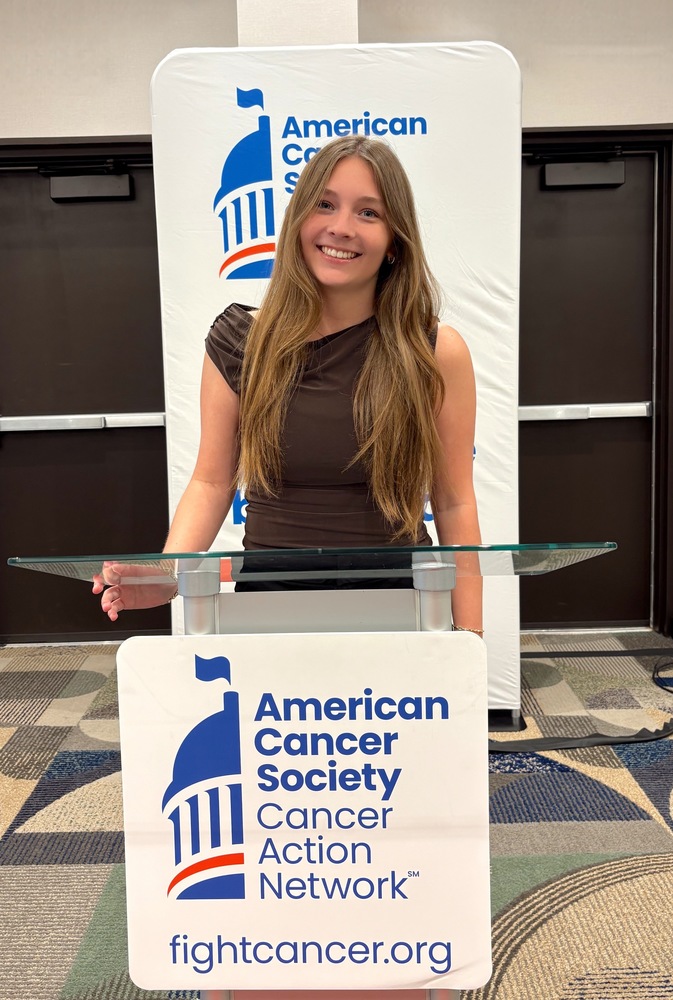
April 27, 2026 – Lidia Rak hasn’t yet graduated from high school, but the Mandarin High School senior can already boast of several impressive accomplishments. She’s performed in-depth statistical research on cancer trends in Jacksonville, advocated before local and federal lawmakers, and contributed to a $30 million dollar Florida bill supporting local hospitals.
Team Duval News sat down with Rak to talk about her accomplishments, her perspective on youth advocacy, and what’s next for her.
Team Duval News: Hi Lidia! Would you start off by telling us a little bit about yourself and what inspired you to start this project?
Lidia Rak: My name is Lidia Rak. I am a senior at Mandarin High School, and I started my research project originally because I was diagnosed with an autoimmune blood condition when I was little.
And so originally, I started looking into blood conditions. I wanted to look more into that because I knew with my blood condition there was an increased risk for me to develop cancer. So I started doing a little bit of leukemia research tracking cancer data and how often these cases were happening in Florida specifically. But it ended up leading me to brain tumor research, where I found a correlation between radium levels in our groundwater and pediatric brain tumor incidents.
TDN: In your course of analyzing, pulling state data, and performing a statistical analysis, did you have any kind of Aha! moment?
LR: Actually, yes! I was reading this one study about pediatric tumor incidents, and so specifically what I studied was clusters. Pretty much what a cancer cluster would be is, let's say [for example] in the Jacksonville area, there's just an extreme number of cancer cases, but it's not because of population.
So that's what cancer clusters are. And I was reading a study where [researchers] were trying to link it to airborne carcinogens, stuff in the air that would cause pediatric cancer. It ended up not being proven statistically significant. But at the end of the study, there was a sentence that said: “but there's nothing that we studied for waterborne carcinogens.”
So that was kind of my Aha! moment, because I knew I could look at, if there's something in our water that's causing these pediatric cancer cases to be rising.
TDN: That’s very impressive! It sounds like you uncovered that through doing some personal research of your own and finding a gap where the research hadn't been taking place.
You've spoken about pediatric cancer as an area of focus. Besides the personal connection, what motivated you to take that on as a pediatric project specifically?
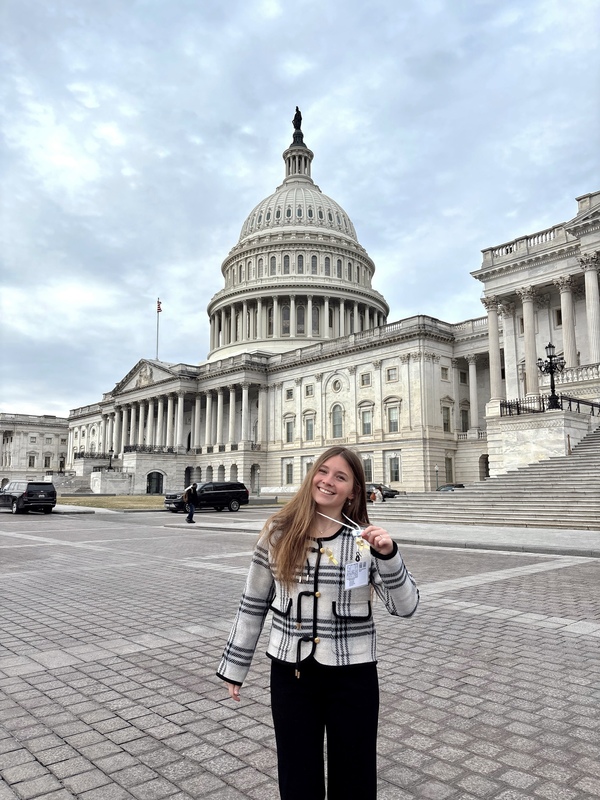
LR: I chose to stick with it because there's such a gap in pediatric care versus adult care, especially with cancer treatments. I started seeing more of that as a national ambassador for the American Cancer Society. So as I go and advocate to Florida senators in DC, I've seen how much funding adult cancers get.
But we need to be setting more money aside for pediatric cancer because although it's less common, it still happens and it affects kids their whole entire lives.
TDN: Do you think being a kid yourself makes you more able to advocate on behalf of kids who might grow up with childhood cancer?
LR: Yes, 100%. Because even when I meet other children that are younger and went through way worse than I did, it's just easier connecting with a 5- or 8-year-old [as opposed to] an adult.
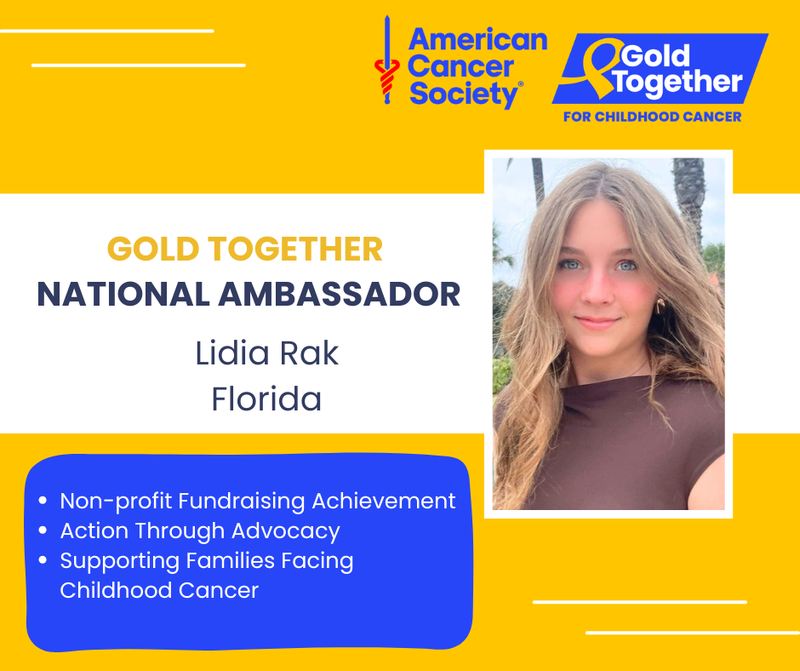
TDN: And you dovetailed very nicely into my next question. You were selected as a 2026 National Gold Together Ambassador by the American Cancer Society. What does being a voice for this community mean to you?
LR: It means everything to me. When I got the message that I had been selected, I jumped up and I was screaming. It [came] down to feeling like I'm actually making an impact for these kids that struggle every single day.
And that's what means everything to me. Like, it's not the title, but it's what I'm going to do with that and what I'm going to change by having that title. So with all the opportunities I've had through Gold Together, I'm just so eternally grateful that I get to make a difference and help.
TDN: And you've made that difference, as you mentioned, speaking to Florida and D.C. legislators. What was that process like, going from the step of researching independently to having to present it to legislators?
LR: It's not so much diving into data points and specific numbers. I found it's more so giving them an idea of, hey, there's a significant amount of clusters in the Jacksonville area because of the radium in our groundwater.
And so kind of explaining how that's so harmful to kids. And then translating that into why we need more research funding, why we need more patient support for pediatrics.
TDN: Stepping back and taking a larger perspective, what advice would you give to a young person who might be motivated to tackle a challenge similar to this in their own community?
LR: Go for it! I actually just got signed to be an author for the American Cancer Society through a publishing company called Bell Asteri.
I'm writing a book about advocacy specifically targeted to youth audiences [about] how to get involved. Because I didn't know where to start. And so it literally started by me flipping over the Bright Futures volunteer log papers, and American Cancer Society was the first listed. And so I looked into starting a High Schools Against Cancer club, and I just went from there.
And so all the advice I give to people my age, people a few years younger, middle schoolers, is to just go for it. There's going to be someone there that will support you. Get out there, fight for it. You'll meet so many people.
TDN: You've kind of answered this a little bit already with mentions of working on a book and publishing your writings, but what is next for you after this?
LR: I plan to pursue molecular biology in college, and I want to go into the field of medicine and be a pediatric oncologist.
Of course, along with all of that, I'm going to plan on continuing to be involved with the American Cancer Society, expanding research, specifically brain tumor research, and then, of course, writing and publishing that book, and also starting a children's series of picture books.
TDN: Lidia, thank you so much for taking the time to talk with us today.